CJC-1295 Research: Mechanism, Pharmacokinetics, and Published Studies
CJC-1295 Mechanism of Action: GHRH Receptor Binding
CJC-1295 activates GHRH-R — the growth hormone-releasing hormone receptor — on anterior pituitary somatotroph cells. GHRH-R belongs to the class B (secretin-family) GPCRs, a group of receptors that respond to peptide hormones. A 2020 cryo-EM structural study resolved the GHRH-GHRH-R-Gs complex at 2.6 Angstrom resolution [12]. GHRH adopts an alpha-helical conformation upon binding. Two contacts are critical for activation: a Asp3-Lys182 salt bridge and N-terminal Tyr1 contacts. The transmembrane helix 6 (TM6) moves outward upon activation to accommodate the Gs alpha-5 helix — the conformational change that triggers downstream signaling.
From binding, the intracellular cascade proceeds: Gs protein activates adenylate cyclase, cAMP rises, PKA is activated, voltage-gated calcium channels open, and calcium-dependent GH secretory granule exocytosis follows [15]. A 2025 review of GHRH-R signaling confirmed the Gs-cAMP-PKA-Ca2+ pathway as the canonical mechanism, with CREB phosphorylation driving Pit-1/GHF-1 transcription factor activation for longer-term GH gene expression [15].
Four amino acid substitutions distinguish CJC-1295 from native GHRH(1-29): Ala2 (blocks DPP-IV cleavage at the 2-3 bond), Gln8, Ala15, and Leu27. The substitutions were directly motivated by the DPP-IV degradation work of Frohman et al. (1989), which identified DPP-IV as the primary plasma enzyme cleaving native GHRH, converting it to the inactive GRH(3-44)-NH2 fragment within minutes of injection [11].
CJC-1295 and Growth Hormone: Preclinical Evidence
In rodent studies, CJC-1295 administered subcutaneously to Sprague-Dawley rats produced a 4-fold increase in GH area under the curve over 2 hours compared to native hGRF(1-29), and remained detectable in plasma beyond 72 hours [4]. In GHRH knockout mice, once-daily dosing at 2 micrograms per injection restored pituitary GH mRNA expression and normalized body weight, length, femur length, and tibia length to wild-type values [5]. Less frequent dosing (every 48 or 72 hours) produced only partial normalization, establishing a dose-frequency relationship for sustained GH axis activation.
CJC-1295 with DAC: The Drug Affinity Complex Variant
The DAC (Drug Affinity Complex) modification adds a maleimidopropionic acid-lysine group to the C-terminus of CJC-1295. After subcutaneous injection, this group reacts with free thiol groups on circulating serum albumin via maleimide-thiol chemistry, forming a covalent bond. Because albumin circulates with a half-life of approximately 19 days, the peptide-albumin conjugate persists far longer than the peptide alone.
In the Teichman et al. 2006 Phase II human trial, CJC-1295 DAC demonstrated a mean plasma half-life of 5.8–8.1 days across four dose cohorts (30, 60, 90, and 125 mcg/kg) [1]. Mean plasma GH concentrations were elevated for 6 or more days following a single injection; mean IGF-1 remained elevated for 9–11 days; after multiple weekly injections, mean IGF-1 stayed above baseline for up to 28 days. The trial enrolled healthy adults and reported no serious adverse reactions at 30–60 mcg/kg.
Albumin conjugation as a half-life extension strategy was characterized by Jette et al. (2005), who confirmed the enhanced DPP-IV resistance and 4-fold GH AUC advantage of the CJC-1295 albumin bioconjugate over native hGRF(1-29) in rat studies [4].
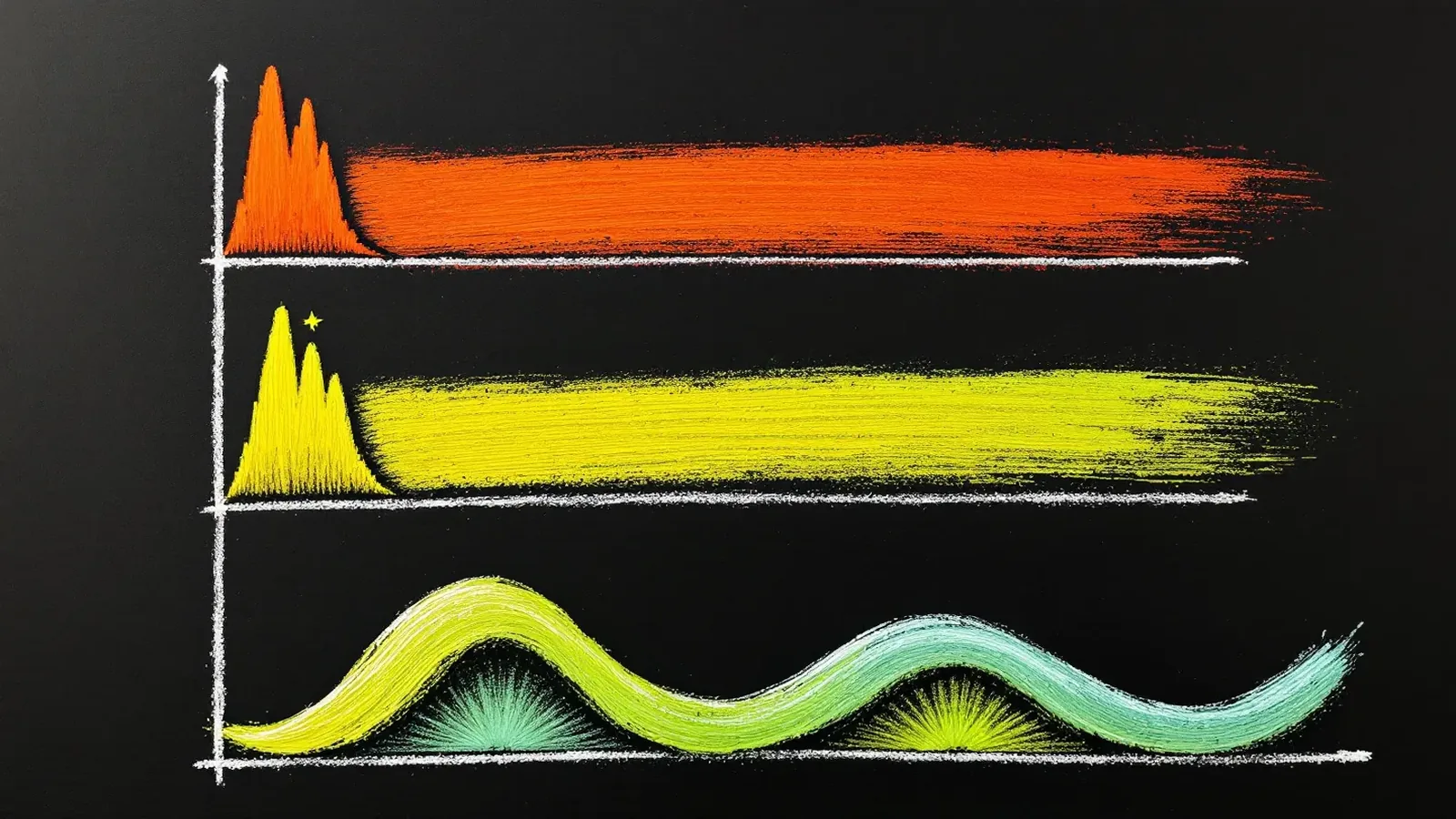
CJC-1295 without DAC (Modified GRF 1-29)
CJC-1295 without DAC — also known as Modified GRF 1-29 or Mod GRF 1-29 in research literature — retains the four amino acid substitutions that confer DPP-IV resistance but lacks the albumin-binding modification. Its plasma half-life is substantially shorter than the DAC form: approximately 30 minutes in rodent plasma, compared to the 5.8–8.1 day half-life of the DAC form in humans [1][13].
Without albumin binding, the no-DAC form must be administered more frequently to maintain sustained GHRH-R stimulation. Research models using no-DAC have focused on pulsatile administration patterns that mimic the natural episodic rhythm of hypothalamic GHRH release. The contrast in dosing regimens between the two variants — continuous elevation via weekly DAC injection vs. frequent pulsatile no-DAC administration — reflects fundamentally different pharmacological strategies rather than a difference in receptor pharmacology. Both variants bind and activate the same GHRH receptor through the same Gs-cAMP-PKA-Ca2+ cascade.
CJC-1295 Pharmacokinetics: Published Human Data
Two published human pharmacokinetic studies exist for CJC-1295.
Teichman et al. (2006) is the primary Phase I/II dose-escalation study, enrolling healthy adults across four single-dose cohorts [1]. Key findings: peak GH elevation was observed within 2–6 hours post-injection. Mean plasma GH remained elevated for 6 or more days at all doses above 30 mcg/kg. IGF-1 elevation sustained 9–11 days. After multiple injections at 60 mcg/kg, mean IGF-1 remained above baseline for up to 28 days. The compound was well tolerated at 30–60 mcg/kg; higher doses (90–125 mcg/kg) produced vasodilatory reactions in some subjects.
Ionescu and Frohman (2006) examined pulsatile GH dynamics during continuous CJC-1295 stimulation [3]. At 60 or 90 mcg/kg, basal GH increased 7.5-fold (p<0.0001) and mean GH secretion increased 46% (p<0.01), with IGF-1 up 45% (p<0.001). GH pulse frequency and magnitude were preserved throughout — the compound elevated the secretory baseline without disrupting the episodic firing pattern that characterizes normal GH release.
Detection studies in human and rat plasma have confirmed CJC-1295 remains detectable at least 4 hours post-IV administration in rat models and is measurable in human plasma using immunoaffinity purification with nano-UHPLC-HRMS at limits of detection below 50 pg/mL [20].

Sermorelin vs CJC-1295: Structural and Pharmacokinetic Differences
Sermorelin is the first 29 amino acids of native GHRH — the same active fragment that CJC-1295 is based on — but without any protective amino acid substitutions [13]. In human pharmacokinetic studies, sermorelin has a plasma half-life of approximately 10–20 minutes, limited by both renal ultrafiltration and DPP-IV cleavage at the 2-3 amino acid bond [13]. This half-life requires subcutaneous injections administered nightly or multiple times daily to maintain adequate GHRH-R stimulation in clinical protocols.
CJC-1295 carries four amino acid substitutions that block DPP-IV cleavage (Ala2 substitution is the primary protection) and three additional mutations that increase metabolic stability [11]. The DAC form extends this further via albumin binding. The result is a pharmacokinetic advantage of approximately 17-fold (no-DAC) to roughly 300-fold (DAC form) in half-life compared to sermorelin.
No direct head-to-head clinical efficacy trial comparing sermorelin to CJC-1295 has been published. The available comparison is pharmacokinetic only: half-life, dosing frequency, and the extent of GH/IGF-1 elevation documented in separate trials. The sermorelin vs CJC-1295 distinction is structural — one molecule is the native sequence, the other is an engineered analog with protease resistance and, in the DAC form, an albumin-binding handle.
Does CJC-1295 Affect Testosterone?
No direct testosterone-raising mechanism has been identified in published studies. CJC-1295 acts on the GHRH/GH/IGF-1 axis, which is pharmacologically distinct from the HPG axis (hypothalamic-pituitary-gonadal) that regulates testosterone production. No published clinical or preclinical study has measured testosterone elevation as a primary or secondary endpoint in CJC-1295 trials. Some animal research has documented indirect anabolic signaling through elevated IGF-1 that may interact with androgen receptor pathways, but no testosterone elevation has been measured in CJC-1295 studies.
How Does CJC-1295 Work?
CJC-1295 mimics the N-terminal active fragment of native GHRH(1-29), binding GHRH-R on somatotroph cells and triggering calcium-mediated GH exocytosis. The four substitution mutations (Ala2, Gln8, Ala15, Leu27) confer protease resistance absent in the native peptide [11]. Ala2 specifically blocks the primary DPP-IV cleavage site. The DAC modification then adds albumin binding via maleimide-thiol chemistry, extending the functional half-life from minutes to days. For CJC-1295 pharmacokinetics and the complete signaling cascade, see the sections above.
CJC-1295 with DAC vs Without DAC: Key Differences
The DAC (Drug Affinity Complex) modification adds a lysine-reactive maleimide group that covalently binds albumin, extending plasma half-life from approximately 30 minutes (no-DAC) to 5.8–8.1 days (DAC) in published human pharmacokinetic studies [1]. The two variants serve different research models: the DAC form is studied under once-weekly dosing protocols; the no-DAC (Modified GRF 1-29) form is studied under pulsatile, more-frequent injection schedules. The Teichman 2006 study used the DAC form in humans. No direct head-to-head efficacy trial between the two variants has been published.
Which Is Better, CJC-1295 with or Without DAC?
The published literature does not contain a direct comparative efficacy trial. The two variants are studied in different experimental models designed around their respective pharmacokinetic profiles. The DAC form (long half-life, weekly dosing in clinical studies) and no-DAC form (shorter half-life, pulsatile dosing models) represent different research tools for different protocols. No conclusion about superiority can be drawn from the available evidence.